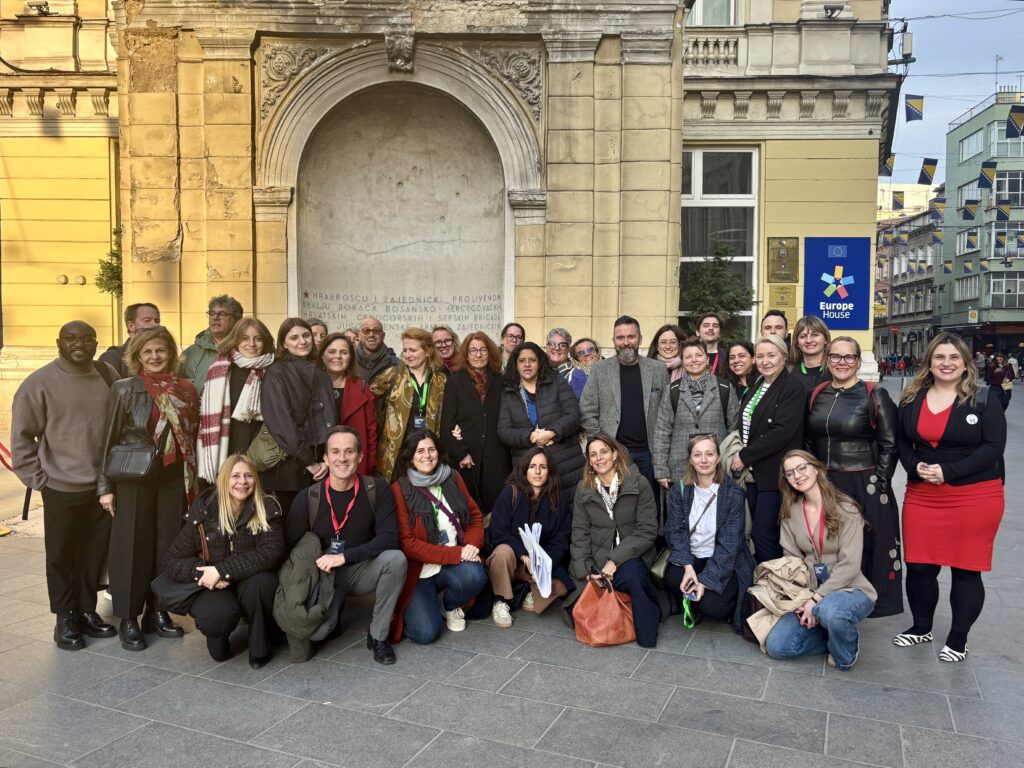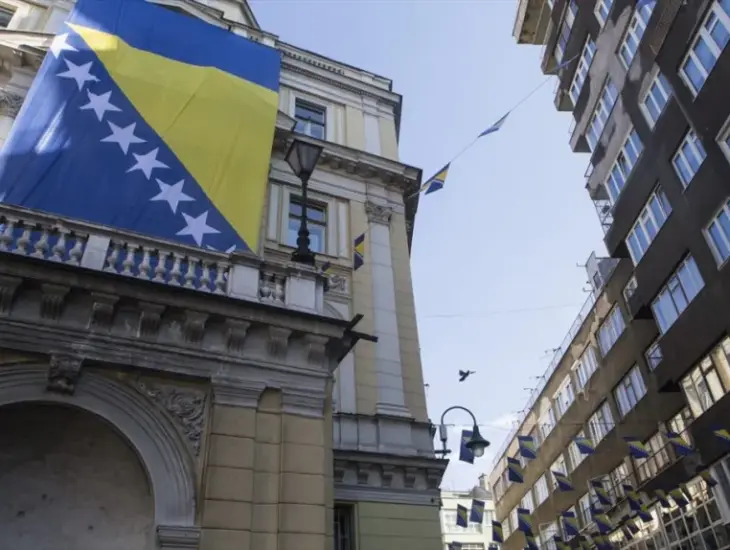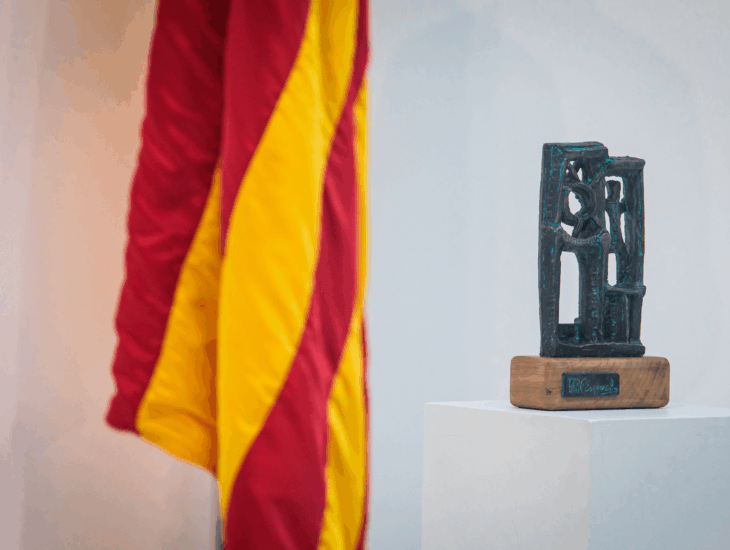
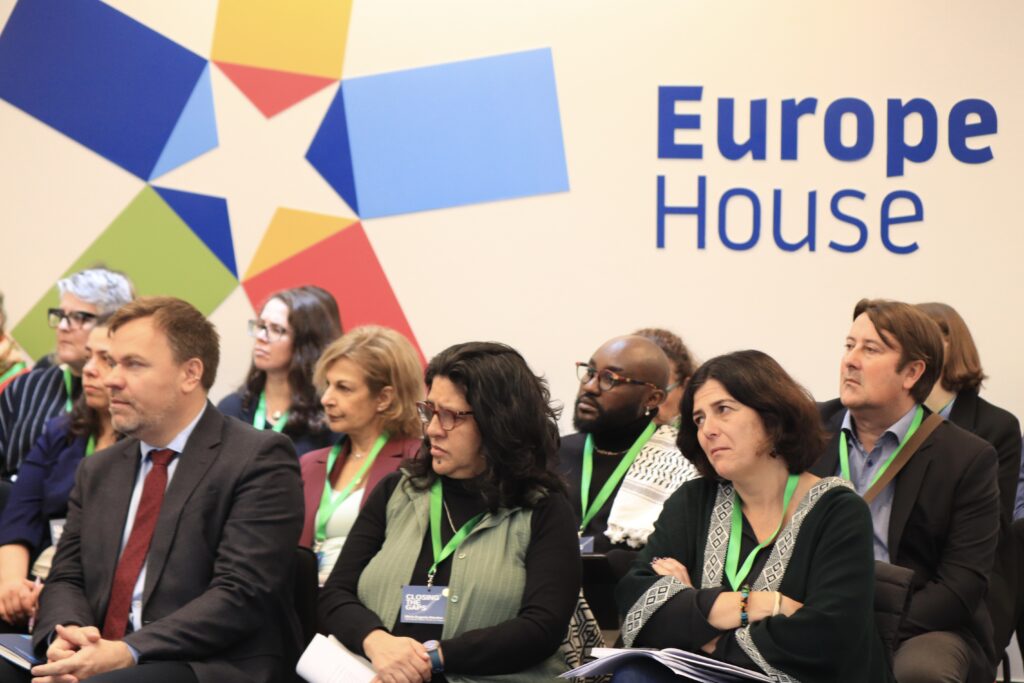
Against a backdrop of rising global conflicts and the weaponisation of history, the International Catalan Institute for Peace (ICIP), in partnership with the International Coalition of Sites of Conscience and the War Childhood Museum, convened a major multi-stakeholder roundtable in Sarajevo on March 24-25.
The two-day conference, titled “Closing the Gaps: Memory, Prevention and Social Cohesion in Europe,” gathered civil society actors, grassroots organisations, scholars, and policymakers at Europe House to critically assess why the post-WWII promise of “never again” has so often failed to translate into effective violence prevention.
Confronting the “New Normal” of War
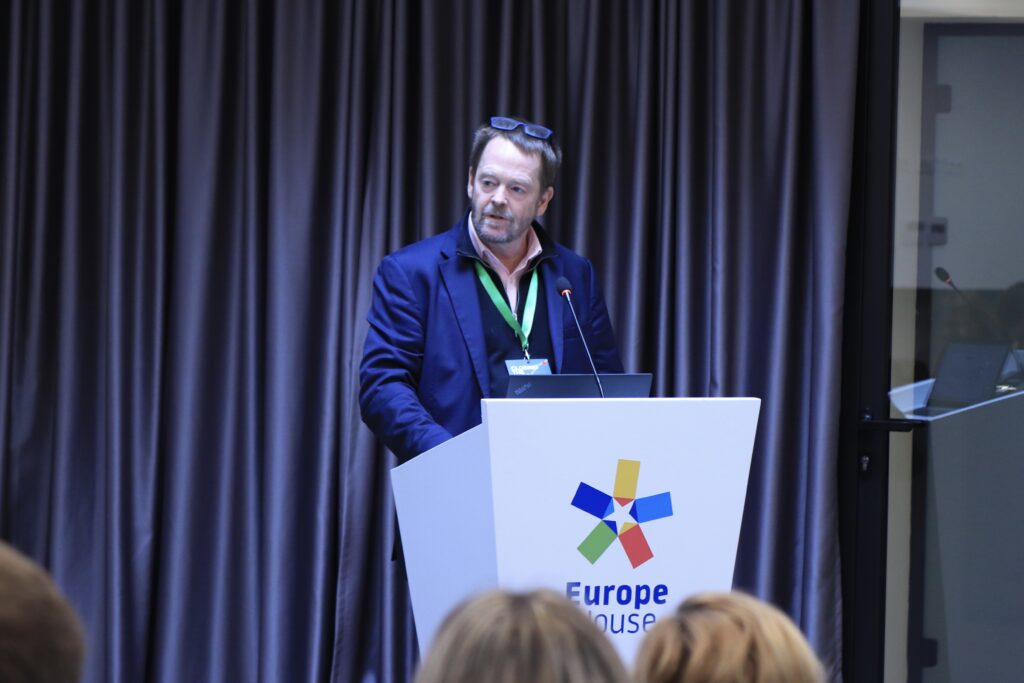
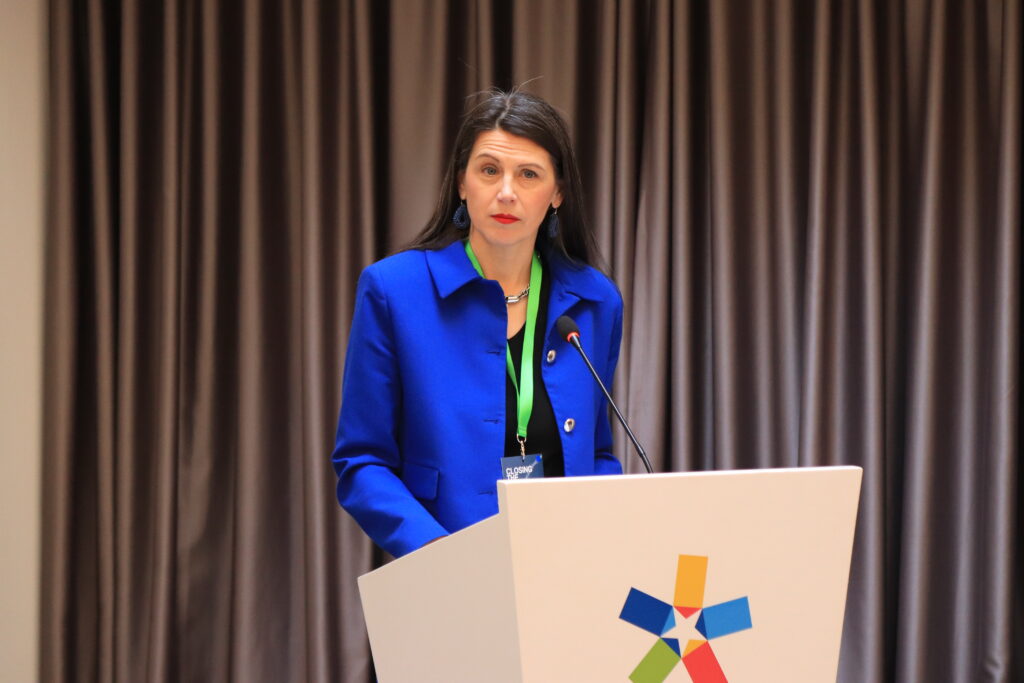
The event opened with a stark acknowledgement of the current geopolitical climate. Kristian Herbolzheimer, Executive Director of ICIP, set the tone by warning that we are living in extremely troubling times in which the trend toward peace agreements has reverted to power politics. “War is framed now as a new normal,” Herbolzheimer noted, challenging participants to build a new narrative of hope and find ways to sustain difficult dialogues in a polarised world.
Throughout the first day, participants mapped the severe limitations of current memory policies. Discussions highlighted how dominant narratives often reflect a “fabricated history” that sidelines marginalised groups, such as the Roma community, whose suffering during WWII and the 1990s wars has historically been excluded from institutional archives. Panellists also condemned the ongoing political instrumentalisation of memory, where remembrance is frequently manipulated to justify contemporary violence or reinforce social divisions rather than heal them.
“Active Hope” and Practical Prevention
The second day shifted the focus from identifying gaps to designing practical, preventive tools. A deeply moving keynote address by Alma Mustafić, a survivor of the Srebrenica genocide, reminded the room of the true purpose of remembering. “Memory is not just about the past. It’s a tool for prevention, for civil engagement and for social projects,” Mustafić stated, adding that memory feeds the courage to speak out against injustice and stand in solidarity with others.
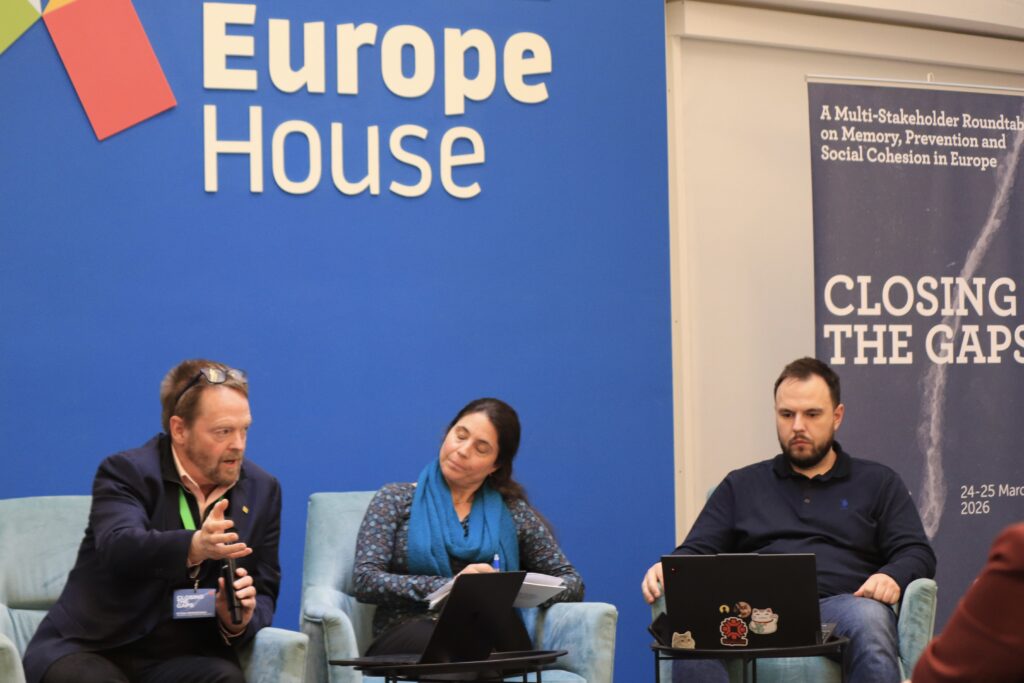
Participants explored concrete strategies to integrate historical memory into early-warning systems and anti-discrimination mechanisms. Key recommendations that emerged from the specialised working groups included:
- A Holistic EU Approach: A strong call for the European Union to stop fragmenting its anti-discrimination policies into “silos” and instead adopt a comprehensive approach to preventing discrimination.
- No Double Standards: Practitioners urged policymakers to stop viewing atrocities as isolated events and instead treat transitional justice as a long-term security risk, demanding that international accountability be applied without double standards.
- Inclusive, Bottom-Up Peacebuilding: A consensus that memory work must move beyond elite, donor-driven bubbles. Organisations were urged to act as platforms rather than storytellers, engaging youth through practical tasks and utilising local, community-driven practices to build trust.
Building a Community of Practice
Ultimately, the “Closing the Gaps” roundtable served not just as a space for critical reflection but as the foundation for a sustained movement. Recognising the challenges ahead, including potential cuts to EU peacebuilding funding and the ongoing threat of political censorship, participants committed to forming a long-term community of practice.
The holding of the roundtable in Sarajevo, a city marked by the consequences of recent conflicts, but also by efforts toward reconstruction and coexistence, reinforces the commitment of ICIP and the participating organisations to promote memory as a key tool for violence prevention and peacebuilding.