
The International Catalan Institute for Peace has announced a new call for grant proposals aimed at non-profit organizations, foundations and cooperatives registered in Catalonia for participatory networking projects and peace research. The maximum amount available under this call for proposals is 60,000 euros.
The deadline for proposal submission is 15 June 2017. Proposal submission forms can be found on the Generalitat’s administrative procedure website and must be formalized in person.
Month: January 2017
New items at the ICIP Library
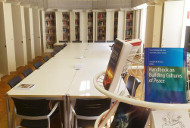
The ICIP Library acquired a hundred new publications in March, most of which are available on loan. The Library, specializing in issues of peace culture, security and conflicts, and a benchmark in this field in Catalonia, is located on Carrer Tapineria 10, 1st floor, in Barcelona.
The Library supports ICIP and researchers and experts in the field of peace, and is in permanent contact with similar centers and institutions from around the world. It is part of the network of specialized libraries of the Generalitat and is included in the University Union Catalogue of Catalonia (CCUC).
Consult the library catalogue.
New items at the ICIP Library
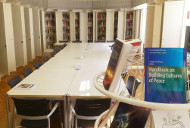
The ICIP Library acquired a hundred new publications in May, most of which are available on loan. The Library, specializing in issues of peace culture, security and conflicts, and a benchmark in this field in Catalonia, is located on Carrer Tapineria 10, 1st floor, in Barcelona.
The Library supports ICIP and researchers and experts in the field of peace, and is in permanent contact with similar centers and institutions from around the world. It is part of the network of specialized libraries of the Generalitat and is included in the University Union Catalogue of Catalonia (CCUC).
Consult the library catalogue.
Madrid hosts the World Forum on Urban Violence and Education for Coexistence and Peace

The Madrid City Council will turn the city into the Capital of Peace from 19-21 April with the celebration of the World Forum on Urban Violence and Education for Coexistence and Peace. It will be a meeting primarily aimed at local leaders, but it will also include the participation of international organizations, academia, NGOs and civil society. The aim of the conference is to promote discussion and reflection on how to eliminate violence in urban environments and how to propose an effective peace agenda at the local government level.
There will be different areas in the Forum to discuss the keys to strengthening peace culture and disseminating experiences that are already being carried out in different parts of the world. The aim of the organizers is to create a dynamic space with round tables, discussions and other more participatory activities such as workshops and cultural exhibitions. All of these proposals fall under the thematic areas of the Forum: governance; peaceful coexistence; and culture, education and values.
ICIP, as a member of the Spanish Association for Peace Research (AIPAZ), is part of the organizing committee and will actively participate in the development of the forum in Madrid along with other organizations.
How to build peace after violence?
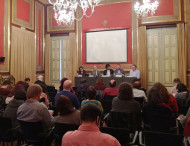
On 20-21 March, ICIP held the seminar Building peace after violence, at the Palau Centelles in Barcelona. The aim of the seminar was to reflect on aspects that characterize societies living through a post-conflict period and analyze prevailing mechanisms to deal with these scenarios: transitional justice and experiences of memory, coexistence and reconciliation.
The inaugural conference was given by Professor Oliver Richmond, member of the Humanitarian and Conflict Response Institute, who reflected on the concept of liberal peace, based on neoliberal paradigms, the limits it faces today, and the challenges of building peace in a changing and globalized world, where citizens are becoming more sovereign and demand a different type of governance.
In addition, the seminar brought together a dozen international experts from countries that have been marked by violence, such as Colombia and the Basque Country. These included María Camila Moreno, director for Colombia of the International Center for Transitional Justice; Farid Benavides, former Vice-Minister of Justice of Colombia; Mark Freeman, executive director of the Institute for Integrated Transitions; Xabier Etxeberria, Professor of Ethics at the University of Deusto; and Irantzu Mendia, researcher at the Hegoa Institute. They all reflected on peacebuilding in transitional periods from different points of view: What elements are needed for a transition to be successful? What is the role of transitional justice? What role should women play in peacebuilding processes? How should victims be treated? How should memory of the conflict be dealt with? What is the purpose of truth commissions?
ICIP organized this seminar as a space for reflection within the reflection process being carried out by the institution in order to focus on more specific lines of work and prioritize certain issues over others.
Video of all the seminar sessions are available on ICIP’s YouTube channel.
Capsule #100 concludes the project “Càpsules de Pau”
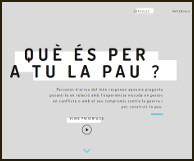
At the occasion of the memorial for the International Peace Day, celebrated on the 21st September, ICIP published the Peace Capsule #100, summarising the project that had been started in 2014 within ICIP’s course of action on the topic of raising awareness around peace.
Each capsule is a short reflection, lasting one minute, on what peace means, recorded on video with Catalan, Spanish and English subtitles. The testimonies can be found on www.capsulesdepau.com, created by ICIP and the Col·lectiu Contrast, with the collaboration of Digital Dosis. With the last extension, the project has 99 reflections to show for, coming from peace researchers, activists and people who have lived through a conflict, coming from 37 different countries.
Among the latest testimonies, we highlight the contribution from personalities such as Arcadi Oliveres, economist and peace activist, recently awarded with the 2017 ICIP Peace in Progress Award; Brigitte Vasallo, feminist and antiracist writer, and Ahmed Galai, member of the Tunisian Peace Dialogue Quartet, 2015 Nobel Peace Prize winner.
The Capsules de Pau project was born with the objective of showing the wide range of angles and expectations that are being projected on the word Peace. Persons from all around the world, with different roles, answer the question: What does peace mean to you?, linking it with the experience people went through in countries in conflict or with their commitment against war and in favour of peacebuilding.
Statement by ICIP regarding the exceptional situation Catalonia is going through

Catalonia is presently going through an exceptional situation where fundamental rights and liberties are being violated after the summoning of the referendum for self-determination on 1st October. In front of this situation, ICIP (International Catalan Institute for Peace), as an institution working on matters of peacebuilding and the promotion of peace, human rights and social justice, condemns any action which does not take dialogue and mutual recognition as starting point for the resolution of conflicts, as were the political arrests and the repressive answer of the Spanish state over the last few days.
ICIP sends out a call to all institutions in the defence of democracy, dialogue and nonviolence as mechanisms of conflict resolution. We firmly believe that the way out for the political conflict Catalonia is going through, is through a negotiated solution which scrupulously respects the rights of all parties. Negotiation and pact are necessary to get out of the deadlock we are facing, which is the reason why we urge both sides to initiate a dialogue, without the need to wait until the 1st October.
As such, we take sides with the Catalan people in its desire, repeatedly expressed in a civic, pacific and nonviolent manner, to decide freely on its future.
Arcadi Oliveres, Winner of the 2017 ICIP Peace in Progress Award
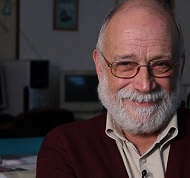
The 2017 ICIP Peace in Progress Award recognizes Arcadi Oliveres for “his tireless dedication and commitment in the promotion of peace, social justice, human rights and disarmament, from a universal perspective”.
Linked since his young years to the scouting movement, the Christian movement Pax Christi and to the Víctor Seix Institute for Polemology, he received his first influences towards pacifist thought from Frederic Roda and Joan Botam. During the period of the Francoist dictatorship, his commitment to democracy led him to join the Assemblea de Catalunya (‘Assembly of Catalonia’), from where he started promoting the Marxa de la Llibertat (‘Freedom March’) in 1976, claiming “Freedom, Amnesty and Statute of Autonomy”.
In 1982, he joined Justícia i Pau (‘Justice and Peace’), organisation he ends up presiding and from where he boosts the first campaign for 0.7% of development aid for Third World countries. All along his trajectory, his determined activism took him to participating in campaigns of the anti-NATO movement, against arms trade, in favour of conscientious objection against compulsory military service and tax resistance, against the external debts of poor countries and against war. In his side, dedicated to global justice, he also was a fierce defender of immigrant regularisation, he was linked to the anti-globalisation movement and to the 15M protests in Catalonia.
The award ceremony took place on Tuesday, April 17, at the Parliament of Catalonia.
An ICIP Delegation Visits SIPRI to Share Experiences
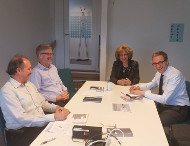
An ICIP delegation headed by Xavier Masllorens traveled to Stockholm on 6 April to meet with the directors of SIPRI in order to learn about the operation and work of the organization and also to introduce ICIP and study possible channels of future collaboration. SIPRI (Stockholm International Peace Research Institute) is an international research institute focusing on three main areas: disarmament, conflict and development.
At the meeting Xavier Masllorens was accompanied by ICIP Governing Board members Vicent Martínez Guzmán and Magda Oranich. The SIPRI delegation was made up of Governing Board chairman Sven Olof Petersson, director Dan Smith and deputy director Jakob Hallgren.
Announcing the First Edition of the ICIP Alfons Banda Award

This year we are launching the ICIP Alfons Banda Award to reward the work of students in the second cycle of Compulsory Secondary School Education (ESO) and post-compulsory education (baccalaureate and mid- and upper-level vocational training cycles). The work should promote the analysis and achievement of results in the theoretical field of peacebuilding or the practical application of nonviolent conflict management.
This award is one of the Young Research Awards granted by the Agency of University and Research Grants (AGAUR) with the aim of promoting the scientific spirit of youth. ICIP is participating for the first time with the selection of the two best papers in the field of peacebuilding, which will be awarded 750 euros each.
Educational centers can submit applications until 28 September 2017 through the Generalitat’s procedures website. The papers can be experimental or theoretical in nature, promoting scientific creativity and the spirit of research in any knowledge area, and must have been prepared during the 2016-2017 school year.
New items at the ICIP Library
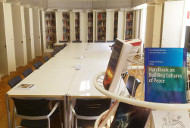
The ICIP Library acquired a hundred new publications in April, most of which are available on loan. The Library, specializing in issues of peace culture, security and conflicts, and a benchmark in this field in Catalonia, is located on Carrer Tapineria 10, 1st floor, in Barcelona.
The Library supports ICIP and researchers and experts in the field of peace, and is in permanent contact with similar centers and institutions from around the world. It is part of the network of specialized libraries of the Generalitat and is included in the University Union Catalogue of Catalonia (CCUC).
Consult the library catalogue.
ICIP produces the new exhibition “Món-tanca”

Like every year, ICIP is working to promote the culture of peace in Catalonia and around the world. One of the novelties of 2017 to contribute to the education and awareness of current issues and debates related to peacebuilding and the culture of peace is Món-tanca (“Fence-World”), a new project by the Enmedio Collective, which is currently under production.
The exhibition will reflect on walls and borders and explore ways to subvert the logic of separation and stigmatization. The opening of the exhibition is scheduled for May in Sant Boi de Llobregat and it will be available for organizations and local governments starting in June.
Exhibitions available
ICIP currently has three more exhibitions available to organizations interested in education and awareness in the field of peace culture.
First of all, there is “Living on the Edge,” a photojournalism project by Marco Ansaloni and Angelo Attanasio on conflict and reconciliation in divided cities in Europe. This is a photographic exhibition and audiovisual presentation of a journalism project carried out in Belfast (Northern Ireland), Mitrovica (Kosovo), Mostar (Bosnia and Herzegovina) and Nicosia (Cyprus). The project shows how conflicts that have divided the residents of these cities are intertwined with the stories of people who work to overcome the past and define a common future.
Secondly, “#efecteGEZI: The Transformative Power of Art” shows the power of collective imagination when used in favor of nonviolent social transformation based on the story of what happened in Istanbul in 2013. It consists of a photographic exhibition that illustrates how people of diverse origins, cultures, lifestyles and beliefs, such as those who gathered in Gezi Park, can set aside their differences and join forces to protest nonviolently against a situation they considered to be unfair.
Finally, “Barefoot Words: Women Making Peace,” by photographer Dani Lagartofernández, is also available. This is a collection of portraits of thirteen women who are actively working to achieve peace in the Middle East. They are Israeli and Palestinian women who dedicate their lives and efforts to achieve an end to the conflict and respect for human rights. All of them are barefoot, a metaphor for their honest and direct stance regarding the reality they have been forced to live in.