

Between October 28th and November 4th, an international mission for the verification of the Colombia peace treaty has travelled to the Latin-American country to check first-hand the progress and difficulties, observed throughout the country during the implementation of the peace accords which were approved one year ago.
The expedition, organised by the Mundubat Foundation, the Peace Brigades International and the International Office for Human Rights Action in Colombia (Oidhaco), was composed by ten members of different institutions and bodies, among them ICIP president Xavier Masllorens. The task force has been visiting the cities of Bogota, Tumaco, Buenaventura, Quibdó and the Urabá communities, to meet with human rights platforms, women’s organisations, Colombian authorities, groups of ex-FARC fighters and representatives of organisations, originating from the peace accord.
According to the preliminary report, the mission has been able to verify that peace has not yet spread to all corners of the territory. Some areas which were abandoned by the FARC have since been occupied by other paramilitary agents, the National Liberation Army or organised crime. The communities complain about the threats, received by human rights defenders and community leaders, the increase of violence and killings, the forced recruitments and sexual violence. Fear is still a constant factor in some areas, with an obvious need for more presence and actions on behalf of the authorities, in particular the civil ones.
On the other hand, violence as consequence of the armed conflict has decreased, and the mission acknowledges that FARC’s commitment with peace remains intact, despite the difficult collective reintegration of its members.
After completing the field work, the international verification mission calls out, especially towards the State of Colombia, for the acceleration of the peace accord application and compliance with all commitments. The observers highlight the need to work towards a stable peace process, using peacebuilding mechanisms which help the programs spread to all corners of the entire country, in order to progress in the effective transformation towards lasting and stable peace.
Month: January 2017
“Entender la noviolencia: contornos y contextos”, edited by Maia Carter and Julie M. Norman
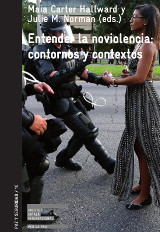
The use of nonviolent action is on the rise. From the Occupy (Wall Street) Movement to the Arab Spring, activists across the world are increasingly using unarmed tactics to challenge oppressive, corrupt and unjust systems.
But what exactly do we mean by “nonviolence”? What are its philosophical and historical origins? Do nonviolent campaigns with political motivations differ from those driven by primarily economic concerns? What are the limits and opportunities for activists engaging in nonviolent action today? Is it a new type of twenty-first century struggle or is it simply a passing trend?
Entender la noviolencia: contornos y contextos offers a comprehensive introduction to nonviolence in theory and practice. It explores the varied approaches, aims and trajectories of nonviolent campaigns from Gandhi to the present day combining analysis of key theoretical debates with more recent perspectives on contemporary and historical case studies. With contributions from leading scholars and practitioners of nonviolence, this book is essential reading for activists, students and teachers interested in contentious politics, international security, and peace and conflict studies.
The editors
Maia Carter Hallward is an associate professor at Kennesaw State University. She is also associate editor of the Journal of Peacebuilding and Development.
Julie M. Norman is a professor at McGill University in Montreal. She has published on various forms of non-traditional resistance, including media activism, legal advocacy, and prisoners’ movements.
Both are also the editors of the book Nonviolent Resistance in the Second Intifada: Activism and Advocacy (Palgrave Macmillan, 2011).
ICIP celebrates the recognition of ICAN with the 2017 Nobel Peace Prize

The Norwegian Nobel Committee has awarded the 2017 Nobel Peace Prize to the International Campaign to Abolish Nuclear Weapons (ICAN) for its work in raising awareness on the terrible humanitarian consequences of the use of any type of nuclear weapons, and for its efforts in the conclusion of a treaty on the prohibition of this type of armament, adopted by the United Nations on 7th July 2017 with the support of 122 states.
ICIP wants to show its satisfaction with the decision of the Nobel Committee and stress the fact that the struggle of the International Campaign to Abolish Nuclear Weapons demonstrates the important role civil society can play in peacebuilding. For ICIP, the creation of international organisations, watching over the defence of peace and human rights, is a motive for congratulations as well as a tremendous wealth.
Therefore, ICIP joins the call, launched by the Nobel Committee, urging nuclear powers to start negotiations with the objective of gradually eliminating the 15,000 nuclear weapons, presently existing worldwide.
The International Campaign to Abolish Nuclear Weapons gathers 468 non-governmental organisations from some hundred different countries.
We Need to Think About Peace Beyond Security to Establish Public Policies of Peace
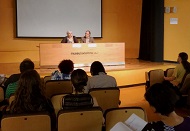
On Wednesday 14 June ICIP held a seminar entitled Peace Beyond Security in Public Policies at the Museum of Badalona. The aim of the seminar was to analyze the notion of security on which present policies are based and subsequently to assess specific policies in order to consider alternatives that imply a substantial change in policies lacking a peace perspective.
In the keynote address, David Chandler, Professor of International Relations at the University of Westminster and Director of the Centre for the Study of Democracy, highlighted the need to move towards a non-securitized peace because the discourses of security are too binary: us/them, good/bad. “Peace has failed internationally because of securitization, because it has become an oppressive security,” he said, and he called for a more creative, plural and transformative peace. According to Chandler, peace cannot have goals; it should be “an open process without objectives, prejudices or conclusions.”
The seminar also devoted a roundtable to the foreign impact of the securitization of policies. Mark Akkerman, a researcher at Stop Wapenhandel, and Carme Colomina, a journalist and member of ICIP’s Governing Board both highlighted EU commitment to the militarization of its borders and the outsourcing of security to third countries.
In the next session, on tools of security, the need for armed forces was called into question in a world where what needs to be protected is no longer the territorial integrity of the State but people. Helena Torroja, Professor of Public International Law at the University of Barcelona, also brought up the phenomenon of defense privatization through private security companies. Torroja denounced the threat to human rights posed by the fact that the private sector is assuming responsibilities that until now belonged exclusively to states.
The final session of the seminar was devoted to internal state security. The speakers warned that the securitized response to phenomena as diverse as terrorism and citizen protests is limiting people’s freedoms and jeopardizing the progress made in the field of human rights. Raymond Taras, a writer and Professor of Political Science at Tulane University, also reflected on the discourse of fear and the importance of the emotional burden. According to Taras, emotions in politics corrupt how things are viewed and tend to do so adversely.
In his closing remarks, David Minoves, member of the ICIP Governing Board, noted that it is difficult to reach a shared notion of peace and security. Nevertheless, he called for optimism and to think about peace beyond security in order to establish public policies of peace.
Videos of the seminar
Students from Les Franqueses and young people from Fedelatina win the Hip Hop for Peace Contest
Coinciding with the School Day of Nonviolence and Peace (DENIP), observed today, 30 January, ICIP has announced the winners of the First Hip Hop for Peace Contest. This contest is aimed at young people and students of Catalonia, between 12 and 25 years of age, with the aim of promoting a culture of peace.
The video “STOP WARS,” created by a group of students aged between 15 and 18 from Lauro High School in Les Franqueses del Vallès, won the award in Category 1, for secondary school, vocational school and high school students of Catalonia. The video is a denunciation of inaction in the face of injustice, and a call for action.
The video “NO LA MALTRATES” (DON’T ABUSE HER), by a group of young people between the ages of 19 and 23 associated with the Fedelatina organization, won the award in Category 2, for socio-educational, cultural, youth and civic centers and institutions. In this case, the video denounces gender violence and calls for the empowerment of women.
In addition, the jury awarded a special mention to “TODOS SOMOS IGUALES” (WE ARE ALL EQUAL), by students from the Manyanet School in Molins de Rei, and “LLUITA CONTÍNUA” (CONTINUOUS STRUGGLE), by Lluís de Peguera High School in Manresa (Category 1); and “RAP CONTRA LA DISCRIMINACIÓ” (RAP AGAINST DISCRIMINATION), by the Martí Codolar Youth Center in Barcelona, and “SALT ÉS MY CITY” (SALT IS MY CITY), by Fàbrica Jove in Salt (Category 2).
A total of 24 videos, corresponding to 11 organizations and/or schools in Catalonia, were submitted to the competition, which is supported by the Department of Education and the Directorate-General for Youth of the Generalitat of Catalonia. The jury was made up of Cécile Barbeito, a member of the ICIP Governing Board; music critic Sandra Tello; Antoni López, representing the Department of Education; Thais Nieto, representing the Directorate-General for Youth; Isabel Ribera, an expert in the field of education; and Miquel Casas, an ICIP specialist.
Awards ceremony
The awards ceremony for the First ICIP Hip Hop for Peace Contest will take place on Monday, 13 February, at 11:30 am, at the ICIP Library (Tapineria, 10, 1st floor, Barcelona).
The awards consist of a masterclass given by workshop conductor and activist Pau Llonch (for the winners in Category 1) and a recording at “La Conga Music” professional recording studio in Sabadell (for the winners in Category 2).
New items at the ICIP Library
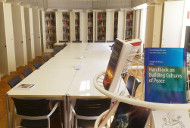
The ICIP Library acquired a hundred new publications in November, most of which are available on loan. The Library, specializing in issues of peace culture, security and conflicts, and a benchmark in this field in Catalonia, is located on Carrer Tapineria 10, 1st floor, in Barcelona.
The Library supports ICIP and researchers and experts in the field of peace, and is in permanent contact with similar centers and institutions from around the world. It is part of the network of specialized libraries of the Generalitat and is included in the University Union Catalogue of Catalonia (CCUC).
Consult the library catalogue.
“El antigolpe”, by Gonzalo Arias
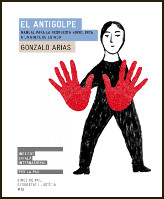
What should a people do to defend itself from pro-coup military and political leaders? El antigolpe (The Anti-Coup) was one of the few books that tried to answer this question following the attempted coup d’état of 23 February 1981 in the midst of Spain’s transition to democracy. Hence the significance of this publication, which Gonzalo Arias had to publish himself after twelve different publishers refused to do so.
The book raises issues that are still relevant today: the hierarchical nature and rules of obedience in the armed forces, the analysis of coup attempts that fail due to disobedience within and outside the army, and the examination of successful coups in order to analyze what failed in the popular resistance.
The historical significance of this publication and the topicality of the issues discussed fully justify its reissue. El antigolpe. Manual para la respuesta noviolenta a un golpe de estado has been published as part of the series “Tools for Peace, Security and Justice” (ICIP and Líniazero), and also in digital format (PDF and EPUB).
“The wound of Ayotzinapa is a wound for all of Mexico, not just for the victims”
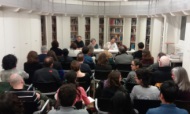
Some fifty people attended the presentation of the book El tiempo de Ayotzinapa on Thursday 9 March. The book was presented by its author, Carlos Martín Beristain, who is also a member of the Independent Interdisciplinary Group of Experts (GIEI, for its abbreviation in Spanish). The event, organized by ICIP and Taula de Mèxic, included the participation of Elena Grau, coordinator of ICIP’s Training and Dissemination Area, and Arturo Landeros, representing Taula de Mèxic.
The night of 26 September 2014, 43 students disappeared and six more people were killed in the Mexican state of Guerrero. In “El tiempo de Ayotzinapa,” Carlos Martín Beristain, one of the investigators of the events, narrates in first person how the process to clarify the truth was carried out and invites the reader to join him on the trip. “When we decided to write a report about the investigation we thought that no one would believe us because the story is so incredible,” says the author. That’s why he decided to write a crime novel “which would go further and explain the story of what happened” during the months-long process of collecting evidence and drafting the report.
The book, which might seem !ike fiction, reflects the desire of the investigating team to dispel the “fog of silence” surrounding the events. It is obvious to the author that “there was an attempt to create a closed story, which was refuted after contrasting the evidence. It is a case of forced disappearance carried out by state forces, not by drug traffickers.”
In light of all the questions raised by the case, the GIEI’s objectives were to find the disappeared young people, carry out a criminal investigation to clarify the facts, and assess the attention given to the victims. “Every dramatic event needs an explanation. The fabricated story needed to be deconstructed to avoid blaming the victims and to provide answers for the families. Up until then there had only been distorted explanations assigning blame, which generated conflict among the victims. We had to conduct dialogue work to help them understand what had happened,” added Carlos Martín.
Regarding the on-the-spot investigation, he highlighted how shocked he was with the way the victims’ families were treated: “The disappeared students’ parents asked us to always tell them the truth and not to sell out because we were the only people they trusted. We had never been told anything like that before,” said the investigator. “Details like that give you an idea of how deep a story is.”
Before concluding the presentation, Carlos Martín Beristain admitted that it was difficult for him to write the book because of the “pain and anger” he felt about the case. Although the truth has still not been discovered, the investigator wanted to end on a positive note regarding the progress made by the GIEI: “We were able to prove that, with international investigation standards, we can solve cases. It is an example for academics, civil society and governments.”
ICIP announces the 2nd edition of its Hip-hop for Peace Contest
ICIP has publicly announced the second edition of its Hip-hop for Peace Contest, once again with the objective of giving more visibility to the commitment and creativity of young people in the context of the culture of peace. As stated in the regulations and the announcement, the contest contains two categories. In the first one, students of the Catalan compulsory secondary education, vocational education or high school level can sign up; in the second category, boys and girls between 12 and 25 years, linked to youth, cultural, civic or socio-educational centres and organisations can register. In both cases, to sign up for the contest, a group needs to consist of minimum three people.
In order to participate, it is necessary to compose a hip-hop piece with original lyrics and record a video of its performance, with a maximum duration of 4 minutes. The text of the songs needs to be linked with the celebration of differences; coexistence in urban or school environments; criticism on violence; denouncing human rights violations; solidarity with people, trapped in or running away from armed conflicts; or the role of young people in peacebuilding.
Registration is open until 30th January 2018, which falls together with the School Day for Nonviolence and Peace (DENIP, Dia Escolar de la Noviolència i la Pau). People interested in participating can complete the following form and deliver the documentation and work presented to the ICIP offices (carrer Tapineria 10, 08002, Barcelona).
The prizes consist of a master class, given by a professional hip-hop artist, as well as the recording of the winning piece in a professional studio. In the first edition of the contest (watch the summary video), where 24 works were presented, the master class was given by the workshop facilitator and activist Pau Llonch, while the recording of one of the winning clips was done in the Conga Music studio in Sabadell.
In this new edition, the contest also counts with the support of the Department of Education and the Directorate General for Youth Affairs of the Generalitat of Catalonia.
ICIP condemns the violence, used on 1st October

ICIP (International Catalan Institute for Peace) firmly condemns the violence, used on 1st October in Catalonia by the security forces of the state and pleads once again for a pacific, democratic and negotiated solution for the political conflict we are facing.
To demonstrate their rejection of violence, ICIP will join the protest marches, organised next Monday 2nd October at 12.00, outside of the work places, as well as all demonstrations in the defence of every individual’s personal rights.
As such, in view of the violation of basic rights and the denial of the Catalan population’s right to decide, we repeat our urgent call for dialogue and the need for international mediation to allow Catalonia to freely exercise its right to decide, expressed massively in the ballot boxes.
ICIP approves a new framework of action for the next four years

The ICIP Governing Board approved the document “Work focus for the 2022 ICIP. Peacebuilding and the development of coexistence” which fixes the overall framework of action the institution will follow during the next four years. The document is based on numerous contributions, collected over the last months by various actors, from a wide range of degrees of reflection. Internal reflections at the heart of ICIP’s Governing Board and working team, and inquiries of an external nature with representatives of all parliamentary groups, private persons from the academic world, organisations from civil society and international institutions, such as SIPRI and the Flemish Peace Institute.
The work document fixes, as general action criteria, the creation of four main transversal programs, which need to include research; transfer of knowledge, training and public outreach; opinion forming; and support for concrete peace actions. These programs are:
– Program 1: Peacebuilding and the development of coexistence after violence has ended.
– Program 2: Violence outside armed conflicts.
– Program 3: Peace and security in public policies.
– Program 4: Companies, conflicts and human rights.
Based on the development of these programs, ICIP wants the different themes to be addressed from an implicit perspective of nonviolence and human safety, empowerment of victims, gender position and special attention for minorities and diversity. As such, ICIP’s actions will revolve around a concept of peacebuilding and the development of coexistence in a positive and prepositive way: a peace which is based on social justice, enforcement of human rights and preservation of individual and collective liberties, and which addresses direct violence as well as structural and cultural violence.
Collective sowing in favour of reconciliation
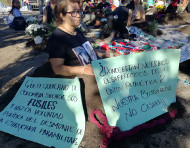
On 21st October, a performance in the park of the Estació del Nord in Barcelona constituted the closing act of the project “Cuerpos gramaticales”, through which ICIP intended to complete a work of memory and reconciliation with women who had been victims of the Colombian conflict. The artistic performance consisted of sowing thirty women on the floor, among them Luz Marina Bernal from the group Mothers of Soacha (2012 ICIP Peace in Progress award), whose son was killed by the Colombian army in the year 2006 in the case known as “false positives” of extrajudicial executions. The sowing, which lasted four hours, was a process of collective and individual catharsis, as well as a reflection on the violence they had experienced.
The initiative, created by the collective Agroarte of the Commune 13 of the city of Medellin (Colombia), is part of the project “Strategies of Memory, Truth and Reconciliation of Colombian women abroad”, organised in Barcelona by ICIP, with the collaboration of Casa Amèrica Catalunya and the support of the city of Barcelona.
The final act of “Cuerpos gramaticales” has been preceded by several training sessions during the months of September and October, in which the participants had been working on memory and reconciliation through different artistic means of expression: dance, theatre, literature and arpilleras.
After passing through Barcelona, “Cuerpos gramaticales” is traveling to Guernica in the Basque country during the month of October, and is foreseen to continue its journey through other European cities.
Videos of the “Cuerpos gramaticales” training workshops