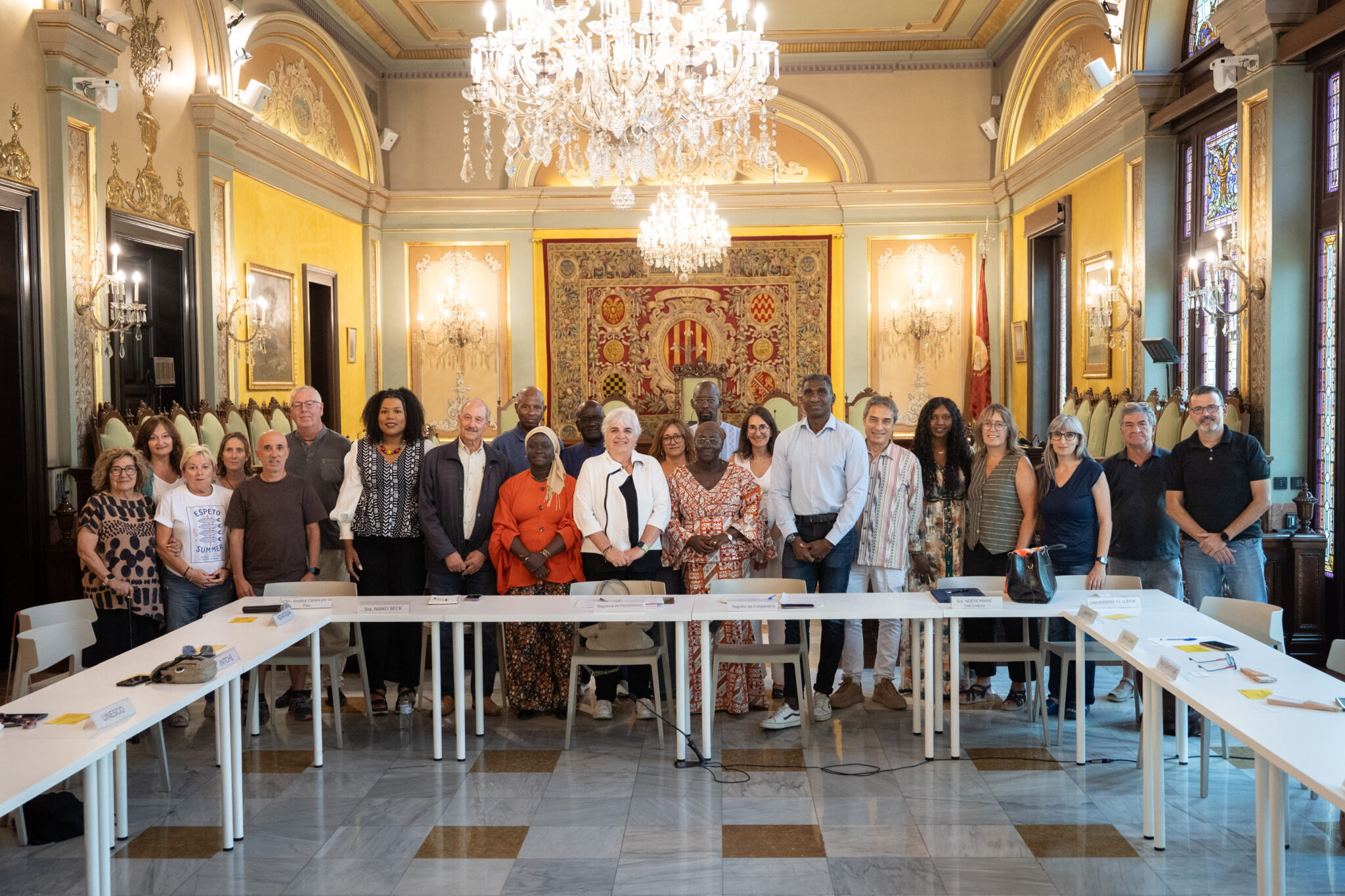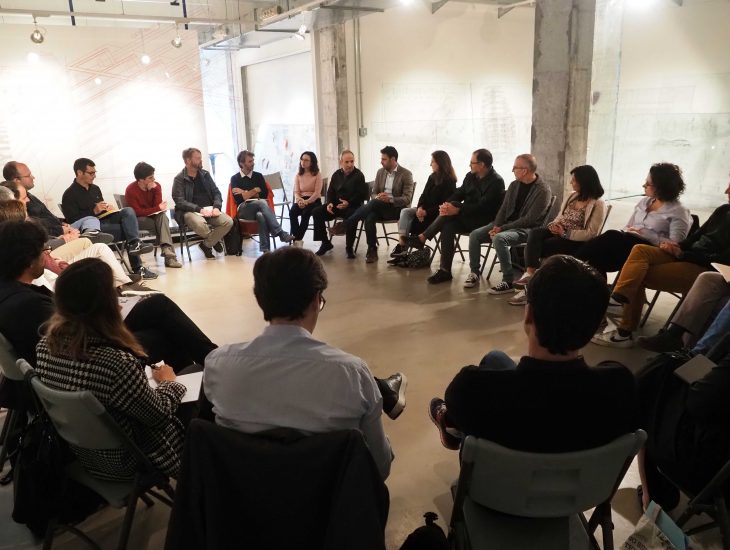
On Tuesday 22 September, ICIP held the ceremony at the Parliament of Catalonia to present the 2026 ICIP Peace in Progress Award to the Platform of Women for Peace in Casamance (PFPC), coinciding with the commemoration of the International Day of Peace. The award recognises this network of 15 Senegalese women’s organisations working on women’s security and rights in the context of the conflict between the natural region of Casamance and the State of Senegal, which has been ongoing since 1982.
More specifically, the 2026 ICIP Peace in Progress Award recognises the PFPC’s work in “positioning women as agents of peace in the resolution of the conflict and breaking the silence surrounding the war through the creation of community dialogue spaces at local, regional and national levels.”
Recognition of women’s struggle
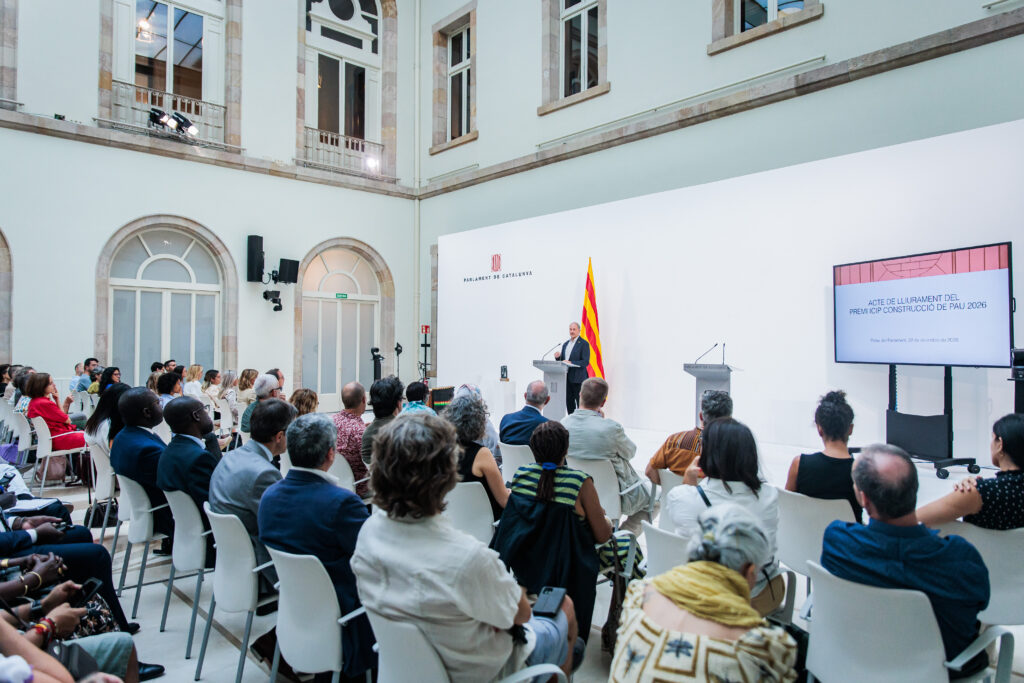
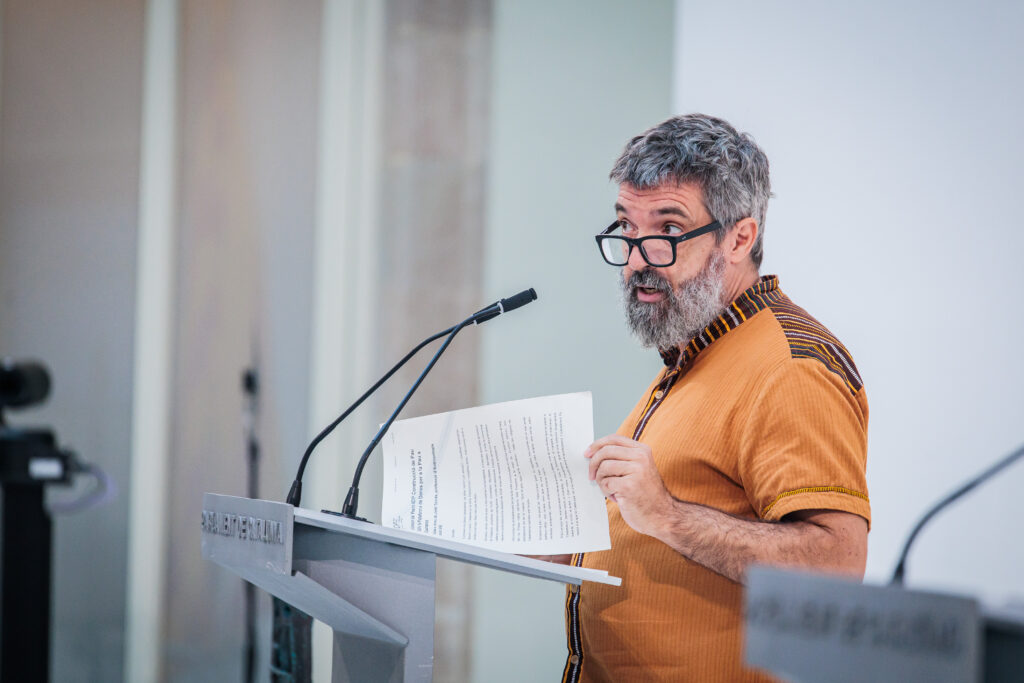
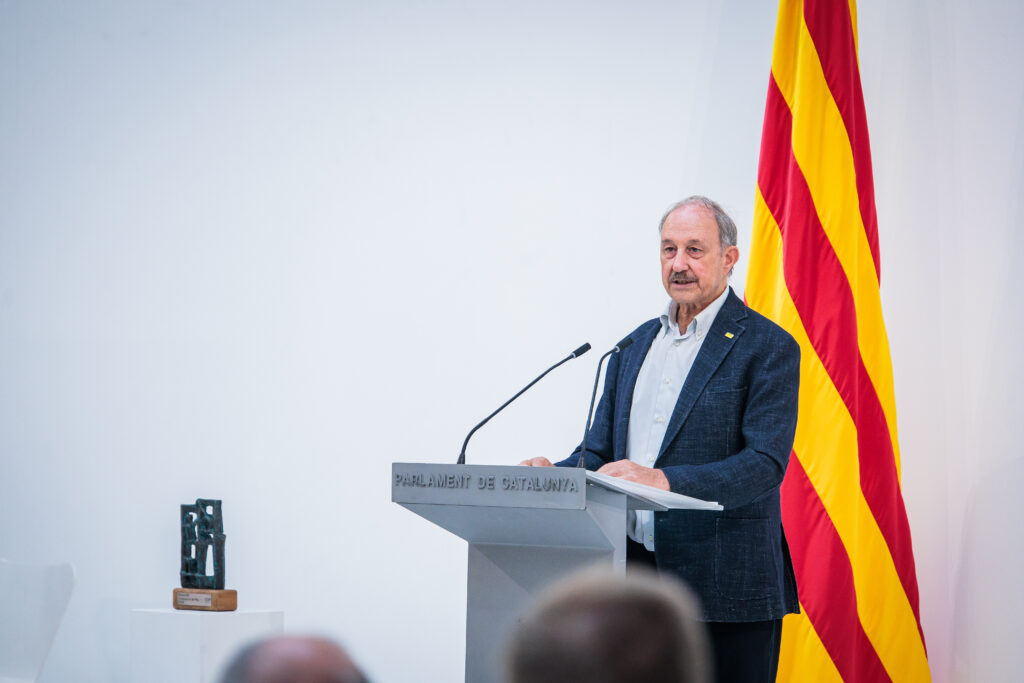
In his opening remarks, ICIP President Xavier Masllorens highlighted the purpose of the ICIP Peace in Progress Award: to recognise “people and organisations that work against the current, upholding human dignity and building bridges where there are physical or mental walls”. In this regard, Masllorens stated that the Platform of Women for Peace in Casamance “teaches us a magnificent lesson: defending women’s rights (women being the most vulnerable group in violent conflicts) means understanding and expressing the experiences lived during the conflict, as well as providing care for girls and women who have survived violence”.
Jordi Tomàs, Professor of Social Anthropology at the University of Barcelona and an expert on the Casamance conflict, presented the background and work of the award-winning Platform, highlighting “the extraordinary historical tradition of women’s associations in Casamance”. His presentation emphasised the PFPC’s grassroots work with local communities, as well as its lobbying efforts aimed at local, national and international leaders, “in a land where, for 44 years, there has been an unresolved political and military conflict, and where lasting peace has still not arrived”.
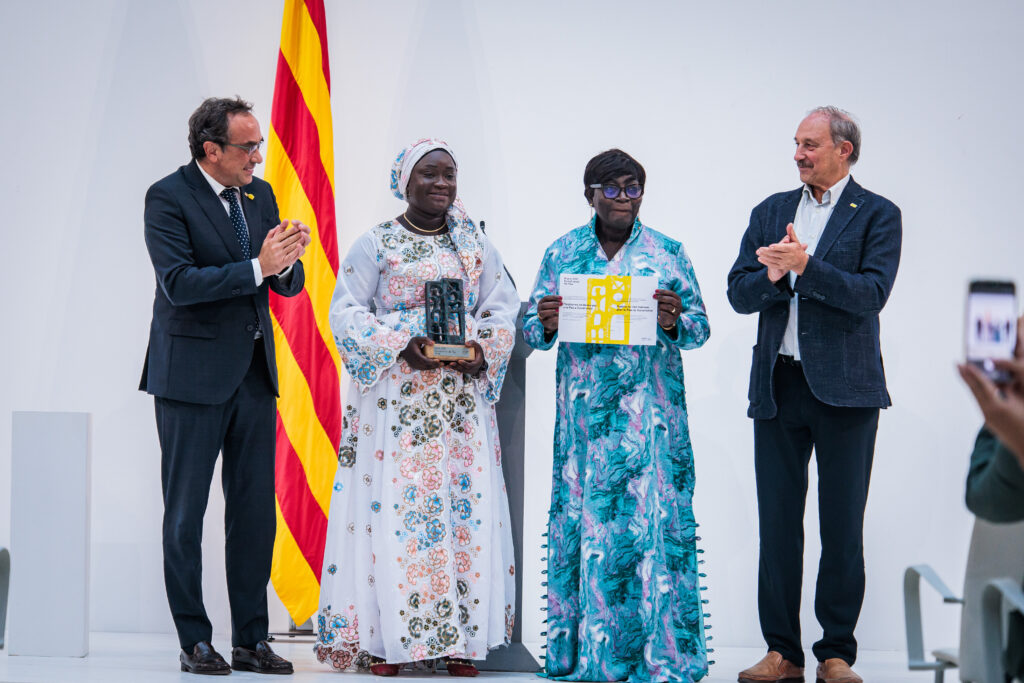
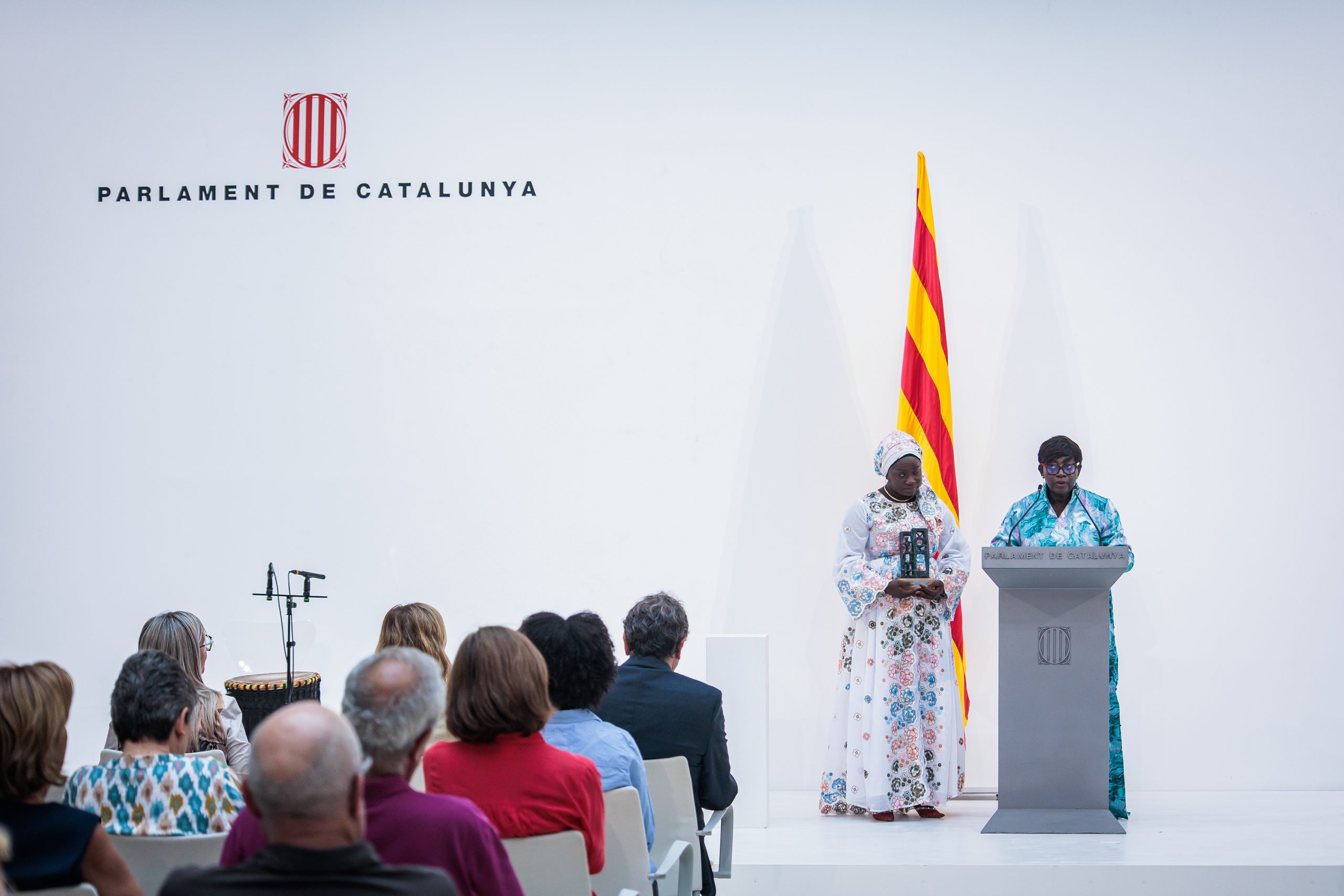
The president of the PFPC, Ndéye Diédhiou, received the 2026 ICIP Peace in Progress Award from ICIP President Xavier Masllorens and the President of the Parliament of Catalonia, Josep Rull, accompanied by Niako Seck, representing one of the PFPC’s member organisations.
In her acceptance speech, Diédhiou stressed that peace is built day by day, village by village, with women at the centre: “Peace is not only a matter for the parties to the conflict; peace is a matter for an entire people and, in this sense, women must play a key role. It is a daily, demanding task that involves dignity and empowerment for women.”
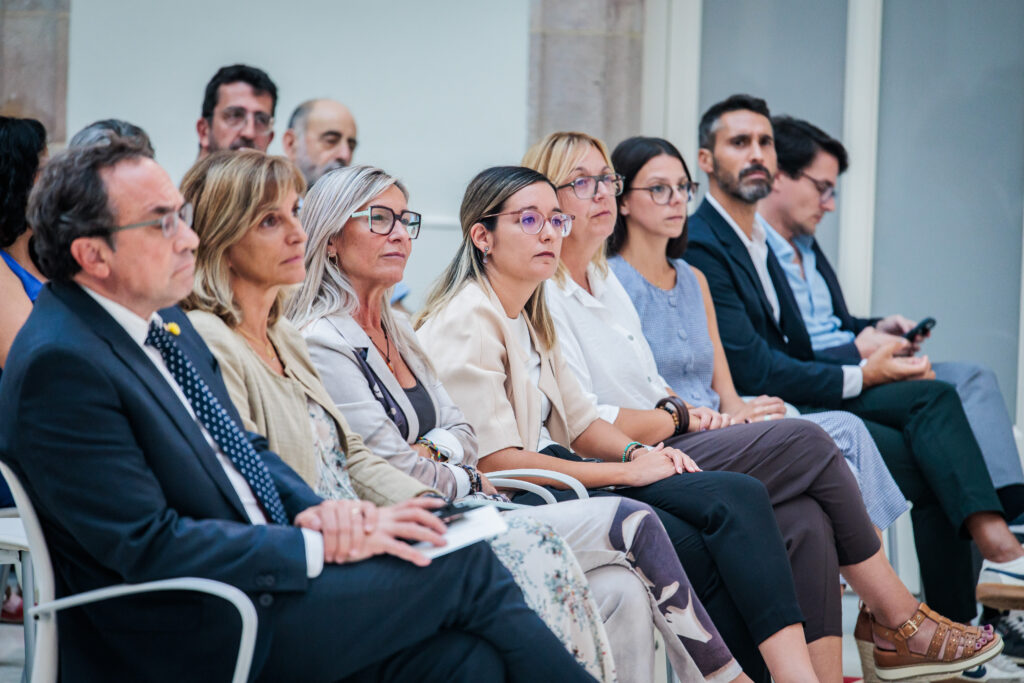
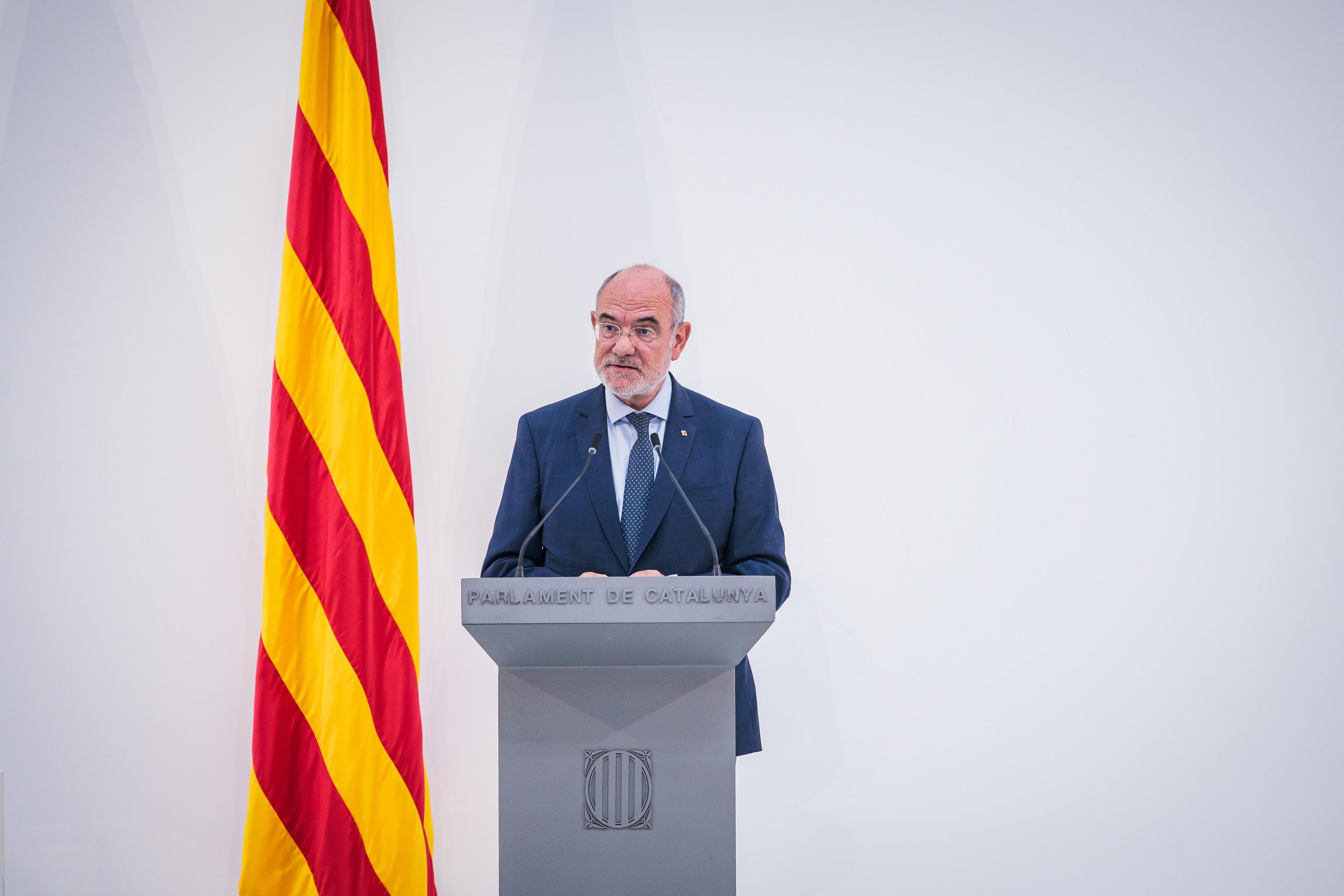
The ceremony also featured Jaume Duch, Minister for European Union and Foreign Action, who highlighted the award-winning platform’s grassroots work as an example of how peace starts with “communities and people who decide to build it every day”.
Parliament President Josep Rull closed the ceremony by thanking ICIP and the award-winning organisation, and stressed the need to defend peace, democracy and dialogue in the face of the current reactionary wave and dehumanising discourses.
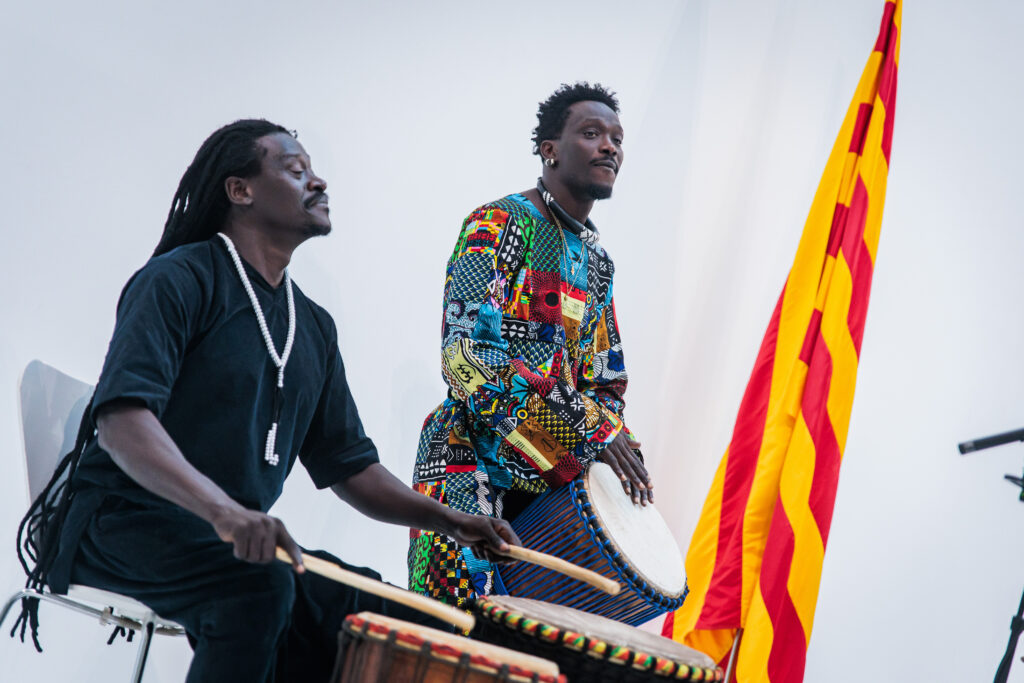
The ceremony was hosted by Sílvia Plana, Head of Strategic Alliances at ICIP, and featured a musical performance by the Senegalese dance and percussion group Ngomez Nokass.
The ICIP Peace in Progress Award: fifteen years of recognition
Established in 2011, the ICIP Peace in Progress Award aims to publicly recognise individuals, organisations and institutions that have made a significant and sustained contribution to the promotion and construction of peace.
The award consists of public recognition, a sculpture created by Nobel Peace Prize laureate, artist and activist Adolfo Pérez Esquivel, entitled Puerta de Sol (Sun Gate), and a cash prize of €6,000. Over its twelve-year history, the ICIP Award has recognised individuals and groups from Catalonia, Bosnia, Syria, the Democratic Republic of the Congo, Colombia, Mexico and Algeria for their work in favour of reconciliation, truth, justice and equality, with a particular focus also on women’s empowerment and a gender perspective.