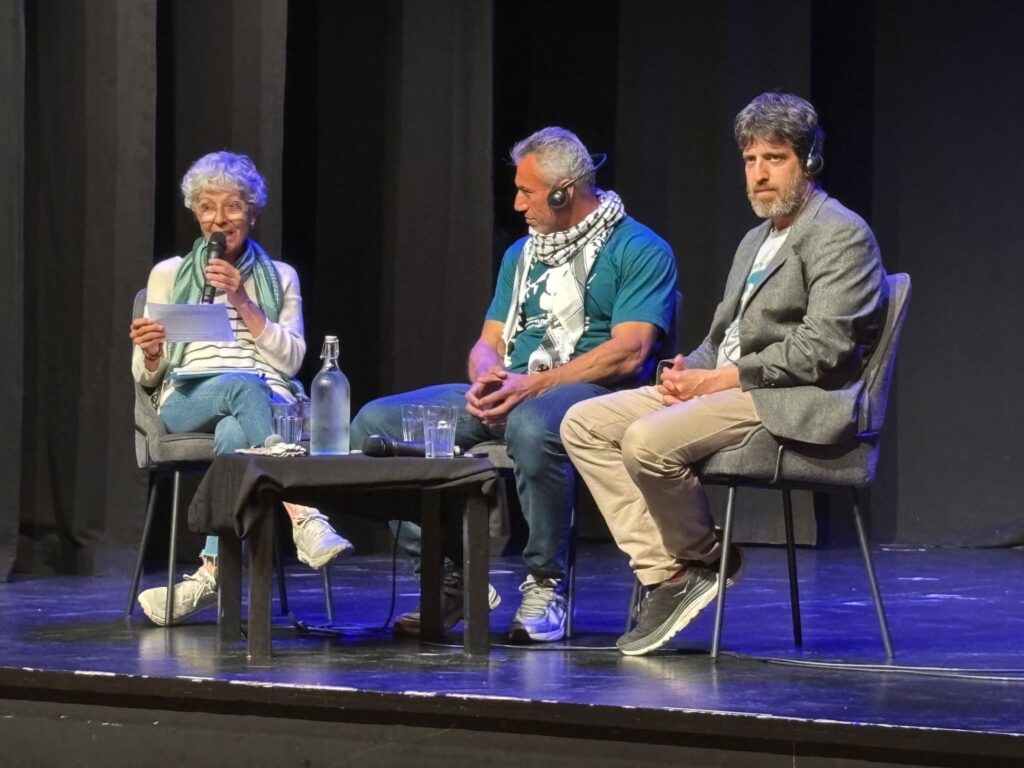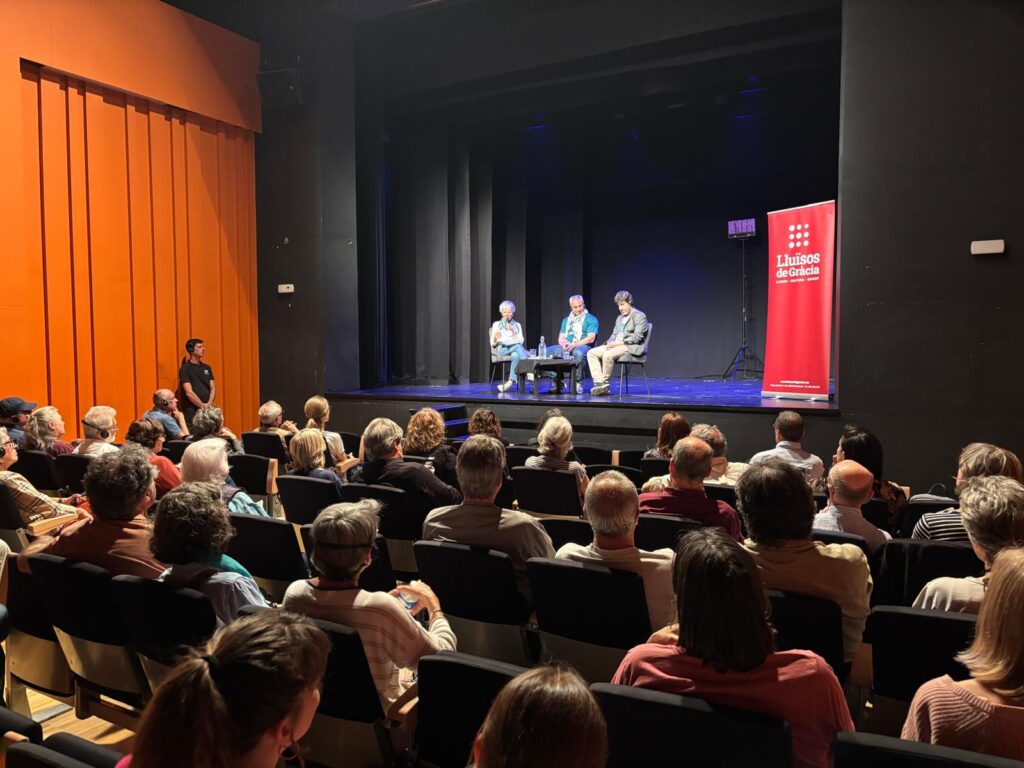
The Lluïsos de Gràcia Theatre in Barcelona hosted the event “Palestinians and Israelis Together for Peace and Against Occupation” on Monday, 27 April, organised by ICIP, FundiPau, NOVACT and Lluïsos de Gràcia as part of the 20th anniversary of the movement Combatants for Peace.
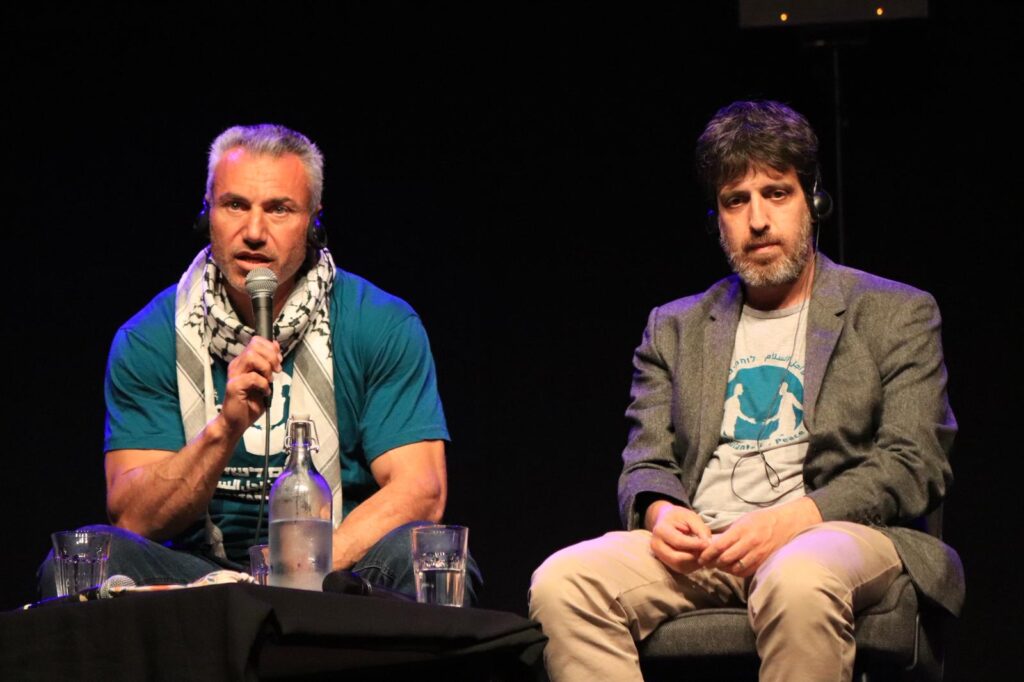
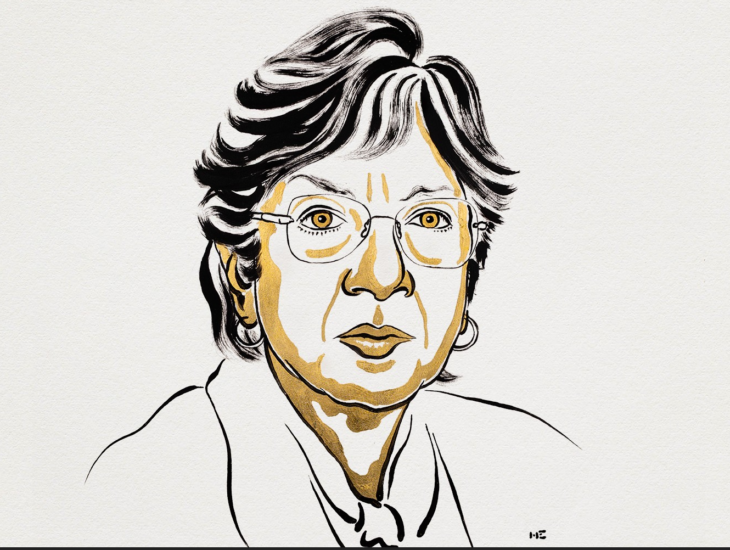
The conversation, moderated by FundiPau vice-president Carme Suñé, brought together two members of the organisation: Israeli activist Elik Elhanan and Palestinian activist Ahmed Helou. Both shared their personal experiences and their commitment to nonviolent resistance as an alternative to the cycle of violence and dehumanisation shaped by decades of conflict, the occupation of the Palestinian territories and the genocide in the Gaza Strip.
A former soldier in a special unit of the Israeli army and co-founder of Combatants for Peace, Elhanan explained how the death of his sister in a Hamas suicide bombing in 1997 profoundly changed his understanding of the conflict. “Revenge is not worth it,” he said. Rather than embracing retaliation, Elhanan decided to distance himself from violence, convinced that Israel’s military logic and use of violence only fuel further violence on the Palestinian side.
During his intervention, Elhanan stressed the need to break away from a “monolithic” view of the enemy and to create spaces for encounter between Palestinians and Israelis. “The occupation is the main source of violence in the region,” he said, while defending the importance of building a shared political space based on mutual recognition and equality.
For his part, Ahmed Helou explained how he joined Hamas at the age of 15 to fight the Israeli occupation and how, after spending time in prison and losing dozens of relatives and friends, he came to the conclusion that violence only perpetuates suffering. “Nonviolence is the path to freedom,” he stated.
Helou highlighted that direct contact with Israelis opposed to the occupation was key to his personal transformation, as it allowed him to stop seeing the “other” solely as an enemy. In this regard, he described Combatants for Peace as “a symbol of the future” and proof that Palestinians and Israelis can work together for justice, dignity and security for both peoples.
Both activists agreed on the difficulties of defending nonviolent positions in the current context, marked by polarisation, pain and dehumanisation. Nevertheless, they stressed the importance of continuing to build alternatives based on dialogue and empathy in the face of narratives that portray violence as inevitable.
The event concluded with a recognition of the work carried out by Combatants for Peace, a movement founded in 2006 by former Palestinian and Israeli combatants who decided to lay down their weapons and work together for a peaceful solution to the conflict. The organisation promotes nonviolent resistance actions, spaces for dialogue, and awareness-raising initiatives, both in Israel and Palestine and internationally, with the aim of demonstrating that it is possible to build alternatives grounded in justice, equality, and mutual recognition.