ICIP, in collaboration with CIDOB (Barcelona Centre for International Affairs) and several European organisations, has launched the webinar series Rethinking Security in Europe — a programme of five online sessions taking place between 7 May and 3 June 2026.
The series was conceived against a backdrop of rising military spending, the war in Ukraine, the genocide in Gaza, and the reshaping of international alliances, with the aim of opening up a space for critical debate about what we mean by security today and what alternatives exist beyond strictly military responses.
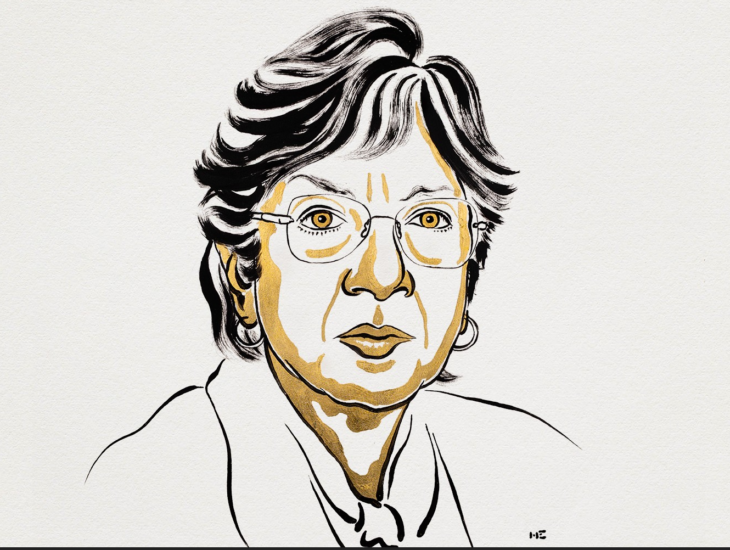
The first session, held on 7 May under the title “The Militarisation of Security in Europe”, featured Mary Kaldor, professor at the London School of Economics, and Tutku Ayhan, researcher at IBEI. The conversation was moderated by Nàdia Zougagh, a law and political science student.
During the session, Mary Kaldor argued that Europe currently finds itself caught between two competing conceptions of security. The first, led by NATO, rests on military logic and nuclear deterrence; the second, rooted in the European Union tradition, is centred on the protection of people, the rule of law and human security. According to Kaldor, keeping the “war imaginary” as the organizing principle of security policy is “extremely dangerous” and diverts essential resources away from social needs.
Tutku Ayhan, for her part, argued that Europe is not simply undergoing a process of militarisation, but rather an “intensified remilitarisation” that is spreading into governance and everyday life. She pointed to the shift in the EU’s institutional language — from presenting itself as a “civilian power” to prioritising concepts such as “strategic autonomy” and “defence readiness” — and noted that this shift is reflected in major military investment programmes such as ReArm Europe.
A feminist perspective
The session also examined the impacts of militarisation through a feminist lens. Ayhan stressed that these processes are far from gender-neutral, citing the militarisation of migration policies as a case in point — with borders increasingly defined by surveillance and the framing of migrants as “security risks.”
Both Kaldor and Ayhan also challenged current budgetary priorities, warning that as military spending rises, welfare systems and humanitarian aid are being progressively eroded — including programmes linked to reproductive health and the prevention of gender-based violence.
The discussion closed with a reflection on what Ayhan described as the “military-academic-industrial complex”, referring to the growing share of funding directed towards military research, particularly in areas such as artificial intelligence and surveillance technologies. She called for greater public debate on these decisions and made the case for security models grounded in law, democracy and social protection.
The Rethinking Security in Europe series will continue over the coming weeks, tackling questions such as who defines European security, who is left out of these policies, and what alternatives to militarised approaches might look like. Sessions are held in English with simultaneous interpretation into Catalan.