Decades of investment in commemorations, memorials and Holocaust education have not prevented the resurgence of historical revisionism, hate speech and identity-based violence across Europe. The question is no longer simply how societies remember the past, but how memory can prevent violence in the future.
This is the starting point of Closing the Gaps: Memory, Prevention and Social Cohesion in Europe, a report published by ICIP, the International Coalition of Sites of Conscience (ICSC) and the War Childhood Museum (WCM).
From Srebrenica to Rwanda and Gaza, the repeated failure of the promise of “never again” exposes a fundamental gap: awareness of past atrocities does not, on its own, prevent future violence. The facts may be known and the testimonies heard, yet violence continues. The report argues that memory must be more than an act of remembrance. It must be actively connected to violence prevention, social transformation and the conditions that enable societies to resist hatred, exclusion and the recurrence of atrocities.
“Memory is not just something we preserve, but something we use. To act. To speak. To stand together.” Alma Mustafić, survivor of the Srebrenica genocide and researcher at Utrecht University of Applied Sciences, in her personal reflection for the report.
The report also challenges the assumption that European memory frameworks are neutral. While some histories receive sustained institutional attention and funding, others remain at the margins of European remembrance, including colonialism, migration, the experiences of Roma communities and women, and the wars of the 1990s in Bosnia and Herzegovina, Croatia and Kosovo. These omissions shape whose experiences are recognized, which lessons societies draw from the past, and whose suffering informs efforts to prevent future violence.
Two days in Sarajevo: Confronting the gaps
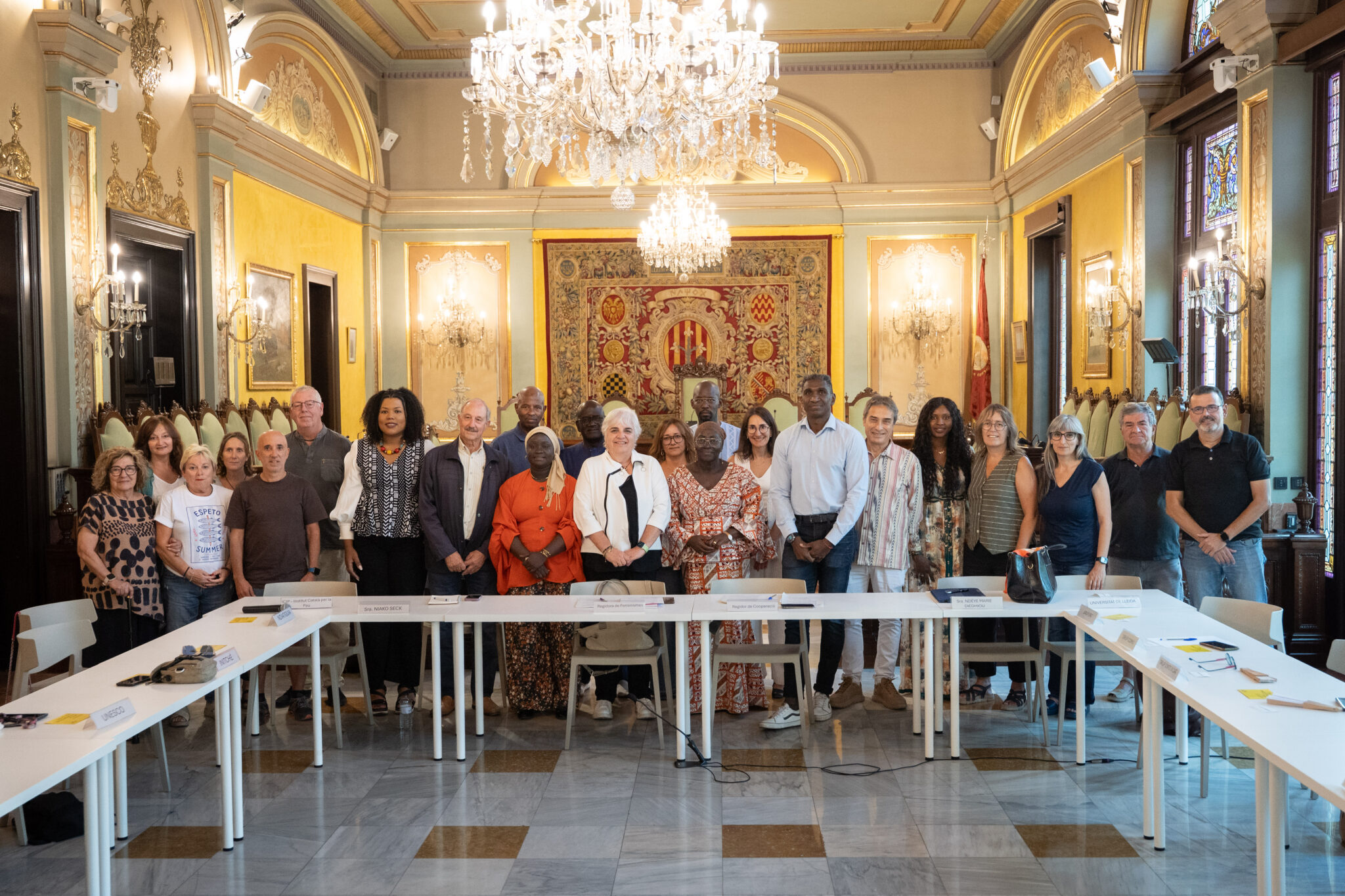
The report draws on the conclusions of a two-day, multistakeholder roundtable held at Europe House in Sarajevo on 24 and 25 March 2026. More than 40 survivors, memory practitioners, civil society organisations, scholars and policymakers from across Europe and beyond came together to examine why memory policies and practices have so often fallen short of their promise, and what it takes to put memory’s preventive and transformative potential into practice.
“Remembering is not enough if it does not change how we act today. The meeting in Sarajevo showed that memory can be a powerful tool for prevention, but only if it is inclusive, honest about root causes and connected to the policies meant to stop violence before it starts.” Kristian Herbolzheimer, Director of ICIP.
Held three decades after the Srebrenica genocide, the gathering surfaced innovative practices emerging across Europe – from Northern Ireland, Spain, Turkey, Bosnia and Herzegovina, and Ukraine – and the new alliances forming across memory work, transitional justice, atrocity prevention, and social justice movements.
“The stories of those who experienced war, particularly as children, carry lessons that extend far beyond the conflicts in which they took place. They help us understand how violence shapes individual lives, families, and entire communities, often across generations. We have a responsibility to ensure that these experiences are not only preserved and acknowledged, but also inform how we educate future generations, foster understanding, and build a culture in which peace is actively nurtured rather than taken for granted.” Amina Krvavac, Director, War Childhood Museum (WCM)
The discussions underscored the need to move beyond fragmented approaches and build stronger connections between those working across these fields. Closing the gaps means not only broadening whose histories are remembered, but also changing how memory informs public action, strengthens social cohesion and helps prevent violence.
Five shifts to transform memory policy and practice
The report identifies five interconnected shifts needed to move memory beyond commemoration and realize its potential to prevent violence and advance social transformation.
- From institutional bias to inclusive memory governance. Inclusive public memory requires more than adding marginalized perspectives to existing frameworks. It demands reconsidering the assumptions, priorities, and institutional structures that determine what is remembered and how.
- From passive remembrance to participatory and transformative memory. Emotional exposure to past suffering does not, on its own, change behaviour. Memory work must become an active civic practice through which people connect the past to their present realities and develop the capacity to act on what they find.
- From polarised or consensual memory to dialogic memory. Memory work can be weaponized to deepen divisions, but calls for reconciliation can also obscure unresolved tensions and injustices.The report invites a reimagining of memory practice as a process that creates space for communities to engage honestly across difference, building shared understanding and trust without flattening the complexity of their histories.
- From depoliticized remembrance to accountable memory. Memory must address the structures and power relations that made violence possible. As the report states,, memory that avoids root causes “cannot prevent the recurrence of violence; it commemorates it”.
- From silos to integrated prevention frameworks. Memory must be deliberately integrated into national violence strategies, foreign policy frameworks, and development policies – not as a cultural add-on, but as a core component of violence prevention architecture.
“We cannot keep investing in remembering the past while failing to confront the conditions that make the violence possible in the present. It’s time for a fundamental shift in how memory work is understood, governed and funded. Memory work must move beyond commemoration to challenge entrenched power, confront injustices, and inform the decisions that determine our collective future. This is a call to fundamentally rethink the role of memory in society and recognize its potential as an essential tool to prevent the resurgence of authoritarianism, hatred and violence”. Silvia Fernández, Program Director, International Coalition of Sites of Conscience (ICSC).
What the report asks
Turning these shifts into practice requires action from the institutions that shape memory policy, deliver programmes and determine how this work is funded.The report sets out concrete recommendations for each of the key actors responsible for driving this transformation:
- European Union institutions and national governments are called on to build inclusive memory governance, integrate memory and transitional justice into EU accession criteria and early warning systems, and establish dedicated funding within EU peace and security instruments. The report urges decision-makers to recognize memory work not solely as a cultural programme, but as a long-term investment in protection, prevention, and democratic resilience.
- Memory practitioners and peacebuilding institutions are called upon to critically assess their own legacies; place affected communities at the centre of governance and co-creation; build alliances with social justice movements; and develop clear prevention strategies grounded in early warning indicators.
- Donors and funders are urged to move beyond short-term project funding towards sustained institutional support, protect grantee independence, and establish cross-sector funding mechanisms that recognize memory as a core component of peace and security investment.
The full report, Closing the Gaps, is available in English here.